Showing posts with label Others. Show all posts

9 Day: Fish River Canyon Hiking Explorer


Tour Itinerary

Day 1: Windhoek

Meet and greet by our representative. We proceed to your guesthouse and after some time at leisure an afternoon township tour is scheduled to be concluded with an optional dinner with a local family, an experience that will last with you for many years. Accommodation - Guest house. Includes: (A), (D), (B&B).


Day 2: Gondwana National Park

Your journey takes you to the Gondwana National park only a stone’s throw away from the second largest canyon in the world. Accommodation - Lodge. Includes: (B&B).

Day 3: Fish River Canyon Hike

After a short drive we reach the Main Viewpoint, which marks the start of the hike. We will be on the move for about 8 hours each day. The 500m descent into the Canyon takes us about 2 hours due to the steep route and loose rocks. However the view into the canyon landscape is spectacular. Finally we reach the bottom and our route continues for 13 km through boulders and rough sand. The water in the canyon is drinkable (Microspore or similar purifying tablets can be used as an additional precaution). Exhausted we reach “Palms Springs” with its thermal sulphur pools, an enjoyment for our tired muscles. Walking time: 7-8 hrs. Overnight under thousand stars; 500m descent; Includes: (B), (L), (D).

Day 4: Table Mountain & Three Sisters rock towers

Today our route takes us along the riverbed, which we cross several times, depending on the water level. It is advisable to take trekking sandals along for river crossings. The ground consists mostly of gravel, pebbles and deep sand. About 15 km from Palm Springs we will pass the “Table Mountain” named after its “mother” near Cape Town. We will sleep close to the “Three Sisters rock towers”, which are illuminated red by the setting sun. Walking time: 7-8 hrs. Overnight under thousand stars. Includes: (B), (L), (D).

Day 5: Four finger rocks

After breakfast we climb a hill from which we have a beautiful view of a rock formation consisting of four thick pinnacles, known as the “four finger rocks”. Another highlight for today is the Von Trotha’s grave; second Lieutenant Thilo Von Trotha, a nephew of the well-known Lieutenant General Lothar von Trotha died here in 1905 during a confrontation between German soldiers and native Namas. Fish River was always been considered an oasis of life being a reliable source of water. We spend another night under the overwhelming African sky. Walking time: 7-8 hours. Overnight under stars. Includes: (B), (L), (D).

Day 6: Fish River Canyon Hike

As we carry on along the riverbed walking gets easier, but remains sandy and rocky. The canyon widens out. Legend has it that a fleeing dragon left behind him the 160 km long and 450m deep furrow, which is now the second largest canyon of the world. Another adventures day slowly comes to an end. Walking time: 7 - 8 hrs. Overnight under stars. Includes: (B), (L), (D).

Day 7: Ai Ais

After 10 km we reach Ai Ais (Nama word meaning very hot). The hot water from the natural spring is pumped into a swimming pool, which we will take advantage of. We will wash off the dust of the previous days with a cold beer and a swim before we get picked up and transferred to our lodge. Accommodation - Lodge. includes: (B&B).

Day 8: Windhoek

After breakfast we will head back to Windhoek, where we will have the evening at leisure or have dinner at the Joe’s beer house the most famous restaurant on the African continent. Accommodation - Guesthouse. Includes: (B&B).

Day 9: Departure Day

After breakfast have time for some shopping before transfer to the airport where your explorer ends!

African Deserts - A Caving and Desert Exploration Camping Safari


This desert camping safari is guaranteed to run, even with a minimum booking of only two guests! The safari will start in Windhoek and end again in Windhoek - 10 days later. Your itinerary will include the well-known Sossusvlei - some of the world's highest sand dunes are found here; other venues within the Namib-Naukluft Park - largest Nature Reserve in Namibia; caving in the longest cave of Namibia in the Kalahari Desert, while viewing mind boggling, panoramic vistas.


The basis of this desert camping safari is that we shall provide you with the necessary transport, fuel and driver, as well as tents and roll-up mattresses; all accommodation and entrance fees as well as guidance, leaving you the choice of activities and bodily nourishment requirements. You are thus under no obligation to partake of any meal that was pre-arranged at a set venue - you eat what you want, when you want it. Maybe organize your own "food-kitty" or something similar. Either dining establishments and/or self-catering facilities are available at most camping venues.

Your Itinerary:

Day 1: Meet your host at Namibia's International airport and transfer to a comfortable bed & breakfast in Windhoek to relax from your flight and acclimatize to Namibia. Time available for obtaining camp provisions.

Day 2: Via the Khomas Hochland to the escarpment, descend into the Namib desert towards your first desert venue - a Namib guest farm.

Day 3: Entire day at own leisure for exploring your new environment, or join in some of the offered activities - excellent hiking opportunities.

Day 4: Hugging the Naukluft Mountains, keep an eye out for the Hartmann's Mountain Zebra, as you continue towards your campsite in a valley between the Naukluft- and Tsaris Mountains.

Day 5: Be woken before sunrise to travel along the Tsauchab River Valley towards some of the highest sand dunes in the world at Sossusvlei. Experience the ever-changing earth-tone hues as the sun rises. After a short rest from climbing the dunes, explore the geologically historic Sesriem Gorge, before returning to camp.

Day 6: Cross over from the Namib desert in the west to the Kalahari desert in the east. Tonight you camp in a "street" between two linear, orange-red Kalahari dunes.

Day 7: Entire day at own leisure for exploring your new environment, or join in some of the offered activities - excellent Game viewing opportunities.

Day 8: Move further north into the east-central Kalahari, out of the dune belt to experience another face of this very early habitat of the human race.

Day 9: After breakfast, you may join the owner on a caving expedition into the longest cave yet found in Namibia, un-developed and un-commercialized.

Day 10: Subject to flight departure time, you may have all morning to enjoy nature walks, or fill those last exposures on the film/ memory disc. Transfer to Namibia's International airport to arrive in time for your departure flight.

Please Note: If a minimum number of guests are stated, we can unfortunately Not Respond to an inquiry for less than the required minimum.

Hot Rock Africa 2010 Climbing Expedition: Stage 6


Tour Itinerary:

Malawi.

Rock climbing in Malawi starts on the beach! but this is not the ocean; the beach bouldering of lake Malawi awaits. Arriving there after a long day trip we will spend a few days at the campsite. From here we can head out on boats to explore heaps of deep-water bouldering, or head out on foot to find a plethora of land-bound boulders and inland crags. There are amazing scuba-diving and snorkeling sites, and with a Carlsberg costing just 30p (50c) life doesn't get much better.


Tearing ourselves away from the beaches for a little while, we will continue to head south to the biggest wall of them all – Mt. Mulanje. The sheer rock walls of Mt. Mulanje rise to over 3000m. Boasting Africa's longest route (Chambe West face, E1/5.10, 1,700m) it has adventure climbing and stunning trekking throughout the rarely visited massif. Rock climbing developed here in the 70's and has sporadically continued until the production of the guidebook to the mountain. The highest peak, Sapitwa means 'do not go there' in local language and the mountains certainly have a serious and challenging feel to them, no matter what grade climb or trek you take on high above the Rift Valley floor.

We'll spend some time on Mulanje chatting to the cedar plantation workers who each carry 50+kg planks on their heads, barefoot from the plantation at 2000m down to sea level. In colonial days there was an electric cableway to take these down; when this broke the local council made the decision not to repair it as manual transportation provided employment opportunities for the whole area. I guess only the machine operator would have been cheesed off. Not a western mindset but certainly a civilised one. After the rigours of Mulanji we head back to Blantyre to relax at Dougal's campsite pool for a day or so before heading along the 'Tete corridor' through Mozambique and into Zimbabwe.

Zimbabwe.

Entering Zimbabwe we are immediately confronted by the amount of rock. From the truck we will see huge granite domes, low crags and boulders stretching into the distance for as far as the eye can see. We will spend a week or more on the 100km section of road that takes us from the Mozambican border to Zimbabwe's capital Harare and in due course to one of the natural wonders of the world, the magnificent Victoria Falls.

Mount Dema, our first destination, is one of many 120m-high domes in the area with immaculate granite walls and cracks. Previous trips have established more than 15 routes from VS to E4. These include a spectacular 115m bolted line that takes a featured wall and goes at f7a, and 4-pitch "Flash" HVS 5a which takes a Yosemite-style crack line from bottom to top, finishing through a cave! Repeating these routes and adding many more will keep us entertained for a good few days. We will camp just outside a village, and experience the overwhelming hospitality of the Zimbabwean people, as they bring us their locally brewed beer, and sit with us to watch the setting sun.

The next destination along the road is Sharmu, which has been fairly well developed by the rock climbers in Zimbabwe (all 30 of them), and has also received a few visitors from overseas, including Chris Sharma. With about 70 routes from VDiff-E4 on the slabs and steep crack systems, and the potential for many more new sport and trad routes, we won't get bored. Pick of the bunch in the lower grades is probably Moonwalk at HVS 5a. Climbing above the grass huts next to which we'll camp - it's a truly memorable African bush experience.

From Sharmu, we will make our way to Harare, the very pleasant capital city, and stay in a campsite that is aptly named 'The Rocks'. Sivvy and Elise’s campsite is covered with 2-10m boulders, which makes it perhaps the ultimate campsite for lazy climbers. The bouldering is outstanding, and we have previously put up over 30 quality boulder problems, which once formed the basis for a bouldering competition in the friendly campsite for a day. We will also arrange a day at an excellent climbing area to the north of the city called Ngoma-Kurira. In an area decorated with ancient cave-paintings, you’ll find perhaps 90 bolted routes, both single and multi pitch, on lovely solid granite that is punctuated by the odd pocket of some conglomerate-type rock.

The views are lovely, the climbing excellent, and it is definitely worth a visit for a very relaxing day of bolt clipping. There is other climbing near the city, and we will try to meet up with some Zimbabwean climbers at their local crag – a small quarry just outside the city limits – for some climbing and a BBQ. When not climbing we can enjoy Harare, which has cinemas and some great nightlife, real African drum clubs and good restaurants. Once again we will have a last night meal and party for the people that are leaving and others that are joining.

Macau Shopping


The main shopping centers are scattered around Av. Almeida Ribeiro (New Road), Av. Infante D. Henrique, Rua Pedro Nolasco da Silva and Av. de Horta e Costa.

Macau streets
Stores in Macau Street
Senado Square Area
Senado Square is the main bustling area in central downtown on the northern side of Av. Almeida Ribeiro (New Road) where a great number of shops and food stalls line the streets. The best buys here are fashionable clothes.
Running north from Senado Square is the Rua S. Domingos with its abundance of clothes, shoes and cosmetic shops. It is very reminiscent of the Causeway Bay in Hong Kong for this reason. Brand-label clothes shops selling U2/ G2000, STACCATO, NINE WEST and others on this street are very popular with young people in Macau. Another feature of this street is the various cosmetic stores such as Body Shop, Sa Sa, Angel, H2O+ and others which are usually packed with young girls and female office workers seeking the latest and best in cosmetics in the summer months. Further east to Rua S. Donmingos is Rua Pedro Nolasco da Silva where a copious display of fashionable clothes, bags and sportswear can be found. The largest shopping center in this area has a wonderful selection of men's and women's clothes, jewelry and fashion accessories on each of its three floors. Take a left turn in a northerly direction just before going onto the Rua Pedro Nolasco da Silva and you will find a short street called Rua da Palha. This street has a number of shops selling glass ware as well as an artwork shop selling all manner of delicate porcelain water lily ornaments. (The water lily is the municipal flower of Macau)
On the other side of the New Road are two rows of traditional Chinese buildings. It was a red light area in old days but is now occupied by pastry shops and souvenir shops. In the Rua da Felicidade, you can find bakeries and pastry shops that sell many Macau-style Dim Sum. Here you can sample many of the goodies on offer before deciding on your purchases and is an ideal place to buy gifts that are a unique memento of the region.
At the end of the New Road, there are snack stalls and pastry shops that are noted for the excellence of their local specialties. You can find the best of these and avoid the less desirable ones by people watching. The longer queues are a sure guide to the good ones - remember the local people always know best!
Getting there: TCM 10, 10A, 11 and 21A or TRANSMAC 3, 3A, 5, 6, 8, 8A, 26A and33 reach the Senado Square Area
Red Market& Av. de Horta e Costa
Red Market is now as a pedestrian street at the intersection of Av. do Almirante Lacerda and Av, de Horta e Costa. The street owes its name to a range of red buildings constructed by the Portuguese in the 20th century. At present, it is a well-known shopping street with all sorts of stalls selling fruits, vegetables, flowers and clothes. The fruits here are best in the city and are inexpensively priced.
Starting from the Red Market to the Flora Garden at Guia Hill, Av. de Horta e Costa is another of the city's main shopping streets with a focus in what is called the Three Lamps District. Streets and lanes radiating from this square accommodate a selection of shops selling jewelry, clothes, shoes, cameras and electronic gadgetry.
Getting there: Buses 1, 1A, 3, 4, 5, 8, 16, 17, 23, 25, 26, 26A, 32, 33 and 34 go to the Red Market
Rua de S.Paulo Area
The most popular piazza is located close to the Ruins of St. Paul's. A dozen or so furniture and antique shops can be found along the Rua de S.Paulo with authentic antique porcelain, ancient coins and rosewood reproductions of traditional Chinese furniture. Most shops offer good delivery services at reasonable prices. Rua de N.Srå do Amparo nearby is a gravel road and here various peddlers set out all kinds of pottery, figurines and Chinese paintings as well as secondhand articles on the ground. This area is also well-known for its variety of pastry shops and dim sum bakeries, among which Koi Kei is the best. Several featured shops sell various souvenirs for tourists. You can bargain for the goods in all shops in this area.
Another piazza worth visiting can be found near Hong Kung Temple on the Rua Cinco de Outubro.
Getting there:
Buses nos. 2, 3, 3A, 4, 5, 6, 7, 8A, 10, 10A, 11, 18, 19, 21, 21A, 26, 26A and 33 can take you to the AV. Almeida Ribeiro and then a walk northern ward along the Rua Mercadores can lead you to the area.
New Yaohan& Macau Landmark
New Yaohan, opposite to the reclaimed land of the Macau Ferry Terminal is the most popular shopping center in the city with a full range of electronic appliances and cameras varieties from Japanese.
Getting there: TRANSMAC1A, 3, 3A, 5, 8, 28A, 28B, 28BX, 28C, 32, AP1 or TCM 10, 10A, 10B, 12, 23 and AP1 reach New Yaohan.
Macau Landmark, as it is named, is a landmark in the Reclamation Area. This is a new tourist attraction established in the southern part of the Macau Peninsular with fashion shops, dining center and top-rank entertaining facilities catering for tourists.
shopping center
Shopping Mall
Pawnshops

Pawnshops are ubiquitous in Macau, especially near area around the Lisboa Casino. Good deals can be made on watches, jewelries, and other precious items. However, always be sure that you can recognize the difference between the genuine article and a fake before parting with your money!
Bus 3, 3A, 8, 10, 10A, 10B, 12, 22, 23, 25, 28A, 28BX. 28C and 32 will take you to the Lisboa Casino.
Outlying Islands
Taipa Village
Taipa Village is the old town area of the outlying island of Taipa and now very much a tourist area. The Rua de Cunha flanked with numerous pastry shops and street vendors. It has a great reputation as a dining street in Macau with several well known places where you can buy Macau dim sum and snacks.
TCM 11, 21, 21A and 22 or TRANSMAC 28A, 33 and 34 go to this street.
A bazaar is held in the Taipa Village from 11:00 to 20:00 on Sunday. A wide selection of handicrafts, souvenir items, clothes, toys and other interesting things can be found. A convenient car park is available for those who drive to the market.
Bus 11, 22, 28A, 30, 33 and 34 from the Macau Peninsular reach the market and Bus 15 from Cotai can take you there as well.
What to Buy
Antiques& Furniture
A selection of reproduction traditional-style rosewood Chinese furniture, porcelain wares, lacquer, bronze wares, wood carvings and Chinese paintings can be found in Rua de S.Paulo Area.
Tips:
All authentic Chinese antiques will have certificates confirming their provenance. In piazza venues, bargain as much as you like to get the best prices.
Wine
Of course, Macau is a good place to buy aromatic authentic Douru or Alentejo wine imported from Portugal at duty-free prices. Vinho Tinto in Portuguese on wine bottles indicates the red wine and Vinho Branco the white. Macau Wine Museum is the best place to sample different types of wines and get professional advice on how to buy wines. Well-packed wine products are available at all supermarkets.
Jewelry
Gold, pearl and crystal jewelries can be found either in credit standing jewelry shops and souvenir stalls on the antique street near the Ruins of St. Paul's. The credit standing jewelry shops are mainly located near the New Road Area, Av. de Horta e Costa and the region close to Hotel Lisboa.
Macau snack store
Macau Snack Store
Gifts to Tempt the Taste-buds

The Macau-style Dim Sum is well-known throughout South East Asia. Pastry shops and dim sum bakeries in the Senado Square Area and Rua de Cunha offer ideal gifts for families and friends. For details, please see our page on Macau Snacks.
Duty-free Products
Numerous world-famous fashion brands have stores and outlets in the city providing all the latest styles and fashions. Top of the range fashion shops can be found around the areas close to the New Road and Av. Infante D. Henrique. The luxury hotels such as Hotel Lisboa, Mandarin Oriental, Sintra and New Century in Taipa have boutiques selling fashion clothes, duty-free perfumes, cosmetics and electronic accessories.
Tips:
It is always best to purchase brand name cameras and electronic appliances in shops of good standing (Certified Shops) and remember to ask for the quality certificates and receipts in event of any after sales problems.
Clothes
In addition to top-ranking fashion shops housed in luxury hotels, there are many clothes and footwear shops that sell both formal and casual wear ranging from men's suits to women's summer accessories. Traditional styles of Chinese clothing are very popular with many tourists. You can find shops that sell Chinese style clothing in the area around Rua Mercadores in the Senado Square Area or the Red Market Area.
Tip: Small shops do not have fitting room facilities for Customers, so it is vital to make sure you choose your correct size because refunds are not given on items of clothing.
*Certified Shops
The Consumer Council of the Macau government has launched a quality initiative program in the city by granting 'Certified Shop' status to those who have a record of no customer complaints since 2001. Customers buy goods in the shops that participate in this program can obtain free arbitral service at the Customer Arbitral Center in the event of any disputes over purchases.

Kuala lumpur Travel


Malaysia's colourful capital Kuala Lumpur is a beguiling mixture of old and new and is possessed of a remarkably harmonious atmosphere. This is due to the friendly mix of many ethnic groups that make up its population; it's a distillation of modern Southeast Asian city life.
Turn one corner and you could be in the smartest part of Singapore, turn another and you are either transported into the Chinese hubbub of deepest Kowloon, or you find yourself beholding the ornate facade of a Hindu temple.
The speed of recent change has resulted in traditional Chinese and fading ex-colonial houses being flanked by gleaming skyscrapers, while hawkers and fortune tellers share the streets with besuited businessmen and often bewildered-looking tourists.
And therein, for the visitor, lies the charm of this richly rewarding city. 'KL' as it is locally known, offers an awesome range of experiences and is the gateway to a wonderfully diverse and bountiful country.


Sipadan


Sipadan Island is the only oceanic island in Malaysia. It is well-known for its international diving fraternity as one of the world’s five best dive sites. Rising 600 meters from the seabed, Sipadan Island is located in the Celebes Sea east of the major town of Tawau and off the coast of East Malaysia on the Island of Borneo. This beautiful oceanic island was formed by living corals growing on top of an extinct volcanic cone that took thousands of years to develop.
Sipadan Island is located in the centre of the richest marine habitat in the world, the heart of the Indo-Pacific basin. In this ecosystem, over 3,000 species of fish and hundreds of coral species have been classified.
In the waters around Sipadan, rare diving scenes are frequently seen such as schools of green and hawksbill turtles nesting and mating, schools of barracuda and big-eye trevally in tornado-like formations, pelagic species such as manta rays, eagle rays, scalloped hammerhead sharks and whale sharks. Therefore, Sipadan is popular with its unusually large numbers of green and hawksbill turtles which gather there to mate and nest. And it is not really rare for a diver to see more than seventy turtles on each dive.
Besides that, there is a mysterious turtle tomb lies underneath the column of the Sipadan Island. The turtle tomb was formed by an underwater limestone cave with a labyrinth of tunnels and chambers that contain many skeletal remains of turtles that have become lost and drown before finding the surface.
Currently, this beautiful island is in the care of Wildlife Department. The Wildlife Department has stationed several park rangers to oversee the state of nature of the island. In order to protect the world’s unique flora and fauna on the island as well as the underwater world, the Malaysian Government has made a decision that from the year 2005, no more overnight facilities shall be on the Sipadan Island itself. This implies that all dive operators on the Sipadan Island have to move and diving at Sipadan will be conducted from other destinations likes Mabul and Kapalai.


Why Not Go


You really shouldn’t go to this place for holiday unless you are a scuba diver or you like snorkeling very much. There is nothing much to do on this island except enjoy yourself on the beautiful sandy beaches and watching the coral reef with its rich marine life. Besides that, there is no resort and nothing to buy on the island.


Why Go


The name of Sipadan is a legend in the diving circles, conjuring the images of patrolling hammerhead sharks, millions of colorful reef fish and, above all, dozens of sea turtles swimming peacefully everywhere. As one of the five top diving destinations in the world, Sipadan, the small rainforest-covered tropical island rising from a 700 meter abyss in the Celebes Sea, is an ultimate diving spot that a committed diver cannot miss.
Diving at Sipadan is certainly world class, so this place has attracted many diving lovers. It is well-known that divers are able to see about 150 species of butterfly fish within a single dive in Sipadan. Utilized by marine biologists as the indicators of coral reef health, a great number and species diversity of butterfly fish implies the abundance and diversity of corals. Pristine coral reefs are also landlord to other reef dwellers such as angelfish, snappers, wrasse, sweet lips, and parrotfish as well as the larger pelagic, barracudas, mantas, whales, dolphins and schools of hammerhead sharks.
Besides that, Sipadan Island is well-known with its vast numbers of Green and Hawksbill turtles which feed and breed within its waters before the females climb ashore to lay their eggs in the white sandy beaches. Others than that, diving near the coral reefs surprises you with incredible phenomena likes thousands of schooling chevron barracuda and big-eye trevally or ‘Jacks’. Moreover, floating inside such a tornado of fish is a truly breath-taking experience that is hard to beat.
On the other hand, Sabah is becoming one of the world famous location for ‘muck diving’. ‘Muck diving’ is used by divers to describe the search for rare and exotic small marine animals. Numerous rare and newly identified gobies can be found living in the corals, sand, mud and mangroves of Sabah, along with the rarely seen mimic octopus, neon patterned blue-ringed octopus, delicate flamboyant cuttlefish, psychedelic mandarin fish and ghost pipefish.
It is really worth to have a dive at Sipadan. Generally, the rate for three dives at Sipadan is just around RM260, plus RM40 for equipment (if required). Perhaps the rates might vary slightly among different operators. Boat transfers and packed lunch are included as well. Therefore you no need to worry about the food as there is no restaurant on the island.
It is vital to note that you need to have a permit from Sabah Parks in order to access the island, which will cost you RM40. Only 120 permits will be given out every day and they are typically obtained by the dive operators. You must make sure that the diver operator you choose is diving at Sipadan with permits, as some companies have been caught diving at the island without permits. You should check diver reviews of dive operators in the area before choosing as there are many have had customer complaints regarding faulty equipment.
Besides that, another tourist attraction of Sipadan is snorkeling. Eventually from the beach, the reef is easily accessible and parts of the reef further out can be reached by boat. There are a few dive tour operators bring snorkelers to the island at an all-inclusive rate of around RM170.


Best Time to Visit


You may make your way there any time all around the year but due to Sipadan is now a protected site, there is only 120 dives are allowed on Sipadan in a day. Therefore, it is highly recommended to dive as early as possible to beat the crowds and increase your chances of getting on the roster to dive.


Where to Stay


Previously, Sipadan Island was used to have resorts. In order to protect the environment, all the resorts were forced to close down around the year 2002. Hence, to dive on Sipadan, you have to stay somewhere nearby. There are resorts on the nearby islands likes Mabul which is 25 minutes away by boat and Kapalai which is 15 minutes away by boat.
As recommended, Sipadan-Kapalai Dive Resort is the best place to spend your night. It is just a few minutes by boat from the islands of Sipadan. Planned and built in full style as an airy, comfortable, sunny water village with no land in sight, Sipadan-Kapalai Dive Resort boasts a mile-long sandbank of powdery white sand where you can suntan at complete leisure while gazing out to the miles of brilliant turquoise stretching into the horizon offering the purest image of natural serenity. With the combination of sun and water in a unique and serene setting with friendly staff, Sipadan-Kapalai is an ideal stopover for you to have a great holiday experience.


Where & What to Eat


There are no restaurants on the island. You have to bring your own lunch and snacks there. Besides that, you are reminded to bring along your own water and drinks with you.


Nightlife


There is no nightlife on the Sipadan Island as it is not allowed to stay overnight on the island.


My to do List


- Diving
- Go to sandy beaches
- See the coral reef
-‘Muck diving’
- Snorkeling


Stay Away From


You should stay away from those companies that diving on Sipadan without permits from Sabah Parks. Make sure the diver operator you choose has diving permits from Sabah Parks.


Getting There


Getting to the Sipadan Island requires some effort. The best way for first timer is that by plane. At first, you may fly to Tawau from either Kuala Lumpur which is about three hour’s flight or from Kota Kinabalu which is about 50 minutes flight. Then, continue your trip by minivan or taxi to the port town of Semporna which will take you about one to two hours. And from there you may go to Sipadan itself by fast boat, which only spend one hour.

Cardiff in a day


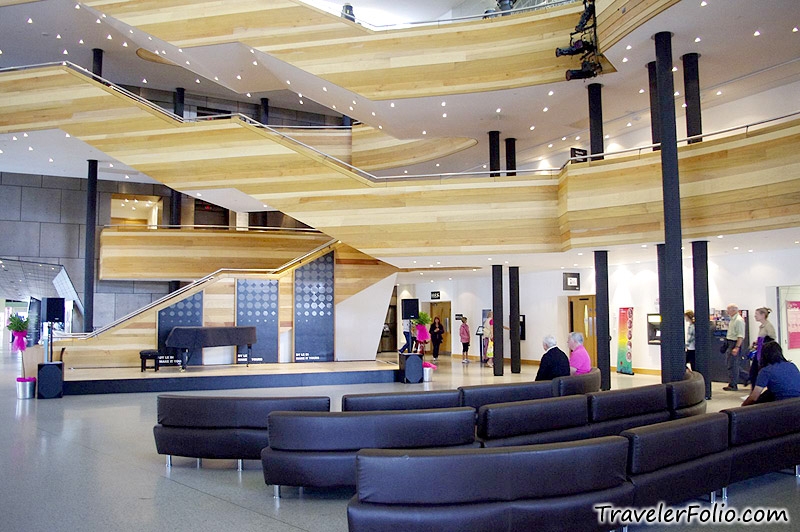
Home to the Welsh national opera and other Wales’ major cultural institutions, the Millennium Centre was opened by the Queen in 2004. Drop in for a free performance that can be jazz, classical, choir or even hip hop at the Glanfa Stage.

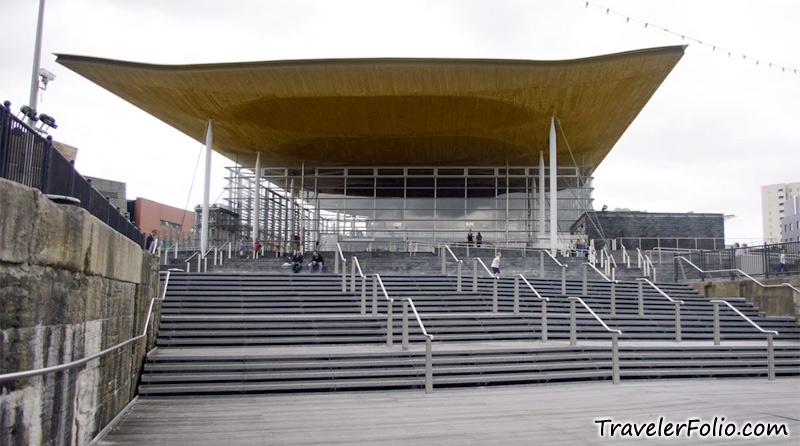
Further down, you would come across an intriguing building with a wave-like roof and see-through glass walls overlooking the bay. It’s the Welsh Senedd (Parliament) Building. Through the glass walls, everyone can see a clear view of the debating chamber and this reflects the encouragement of the involvement of public participation. The eco-friendly building incorporates natural ventilation and interestingly, when the locals express that it allows hot air to be drawn out of the debating chamber, you know it can be synonymous with heated debates!

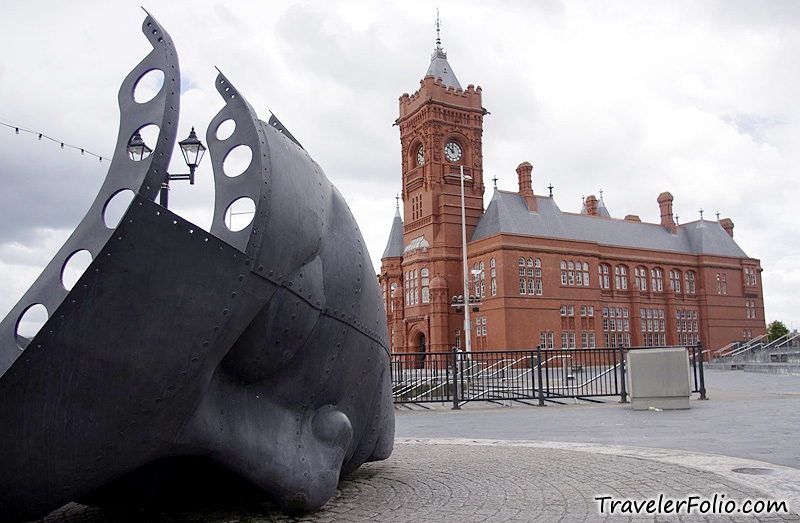
Back in the olden days, seafarers and immigrants from across the world settled near the bay and the population grew. The bustling scenes of port activities were long gone and replaced by holiday-makers relaxing around the bay. Nonetheless, the modern Cardiff Bay still retains the old charm that speaks of its glorious past as a major coal exporter to the world in the 19th century. Established in 1897, the Pierhead still stands elegantly at the waterfront. Originally the headquarters of the Cardiff Railway, the red terracotta building of French-Gothic Renaissance theme is now a Welsh history museum and exhibition centre. It’s affectionately known as the “Baby Big Ben” of Wales. In the foreground, the sculpture of a face combines with a ship hull is the Merchant Seafarers War Memorial that commemorates the seamen of Cardiff who perished during World War II.

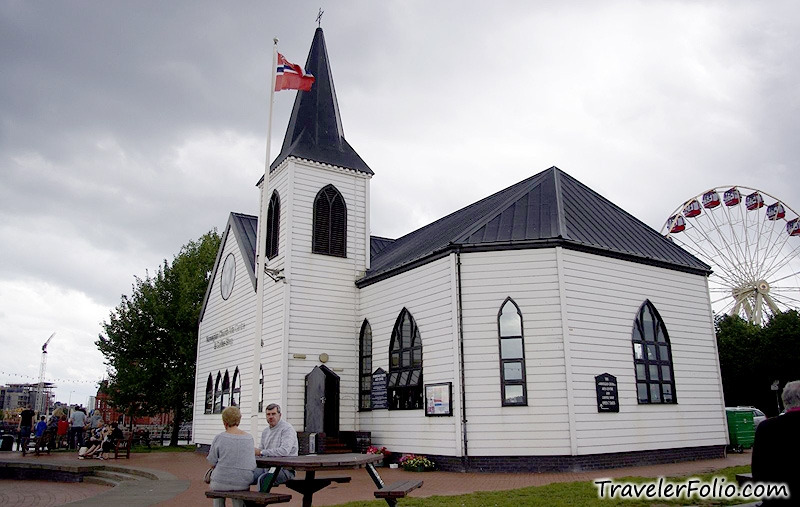
Did you know that the world famous author Roald Dahl was born in Cardiff? He was christened in the former Norwegian Sailors Church, presently known as the Norwegian Church Arts Centre that holds exhibitions, concerts and events. To try some Norwegian flavours, dine in the centre’s coffee shop that offers a range of food and drinks.

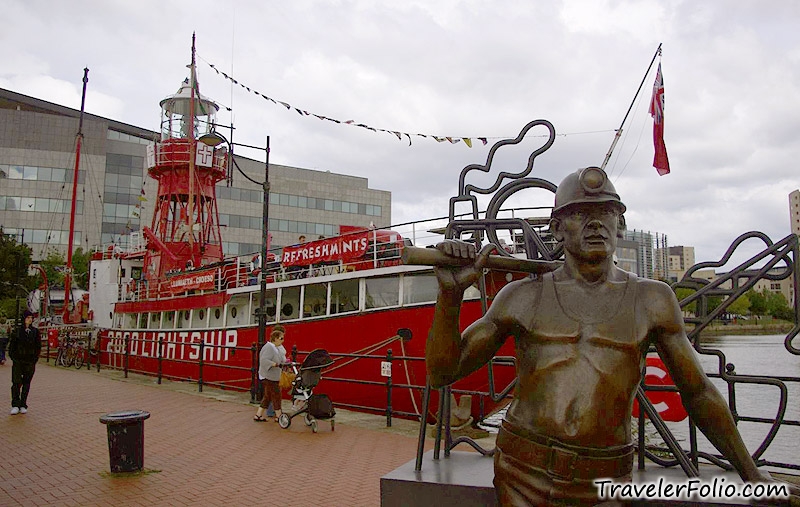
The old lightship Helwick LV14 is a floating chapel for worship and doubles as a tourist attraction where visitors can tour the vessel and enjoy refreshments with a bay view.

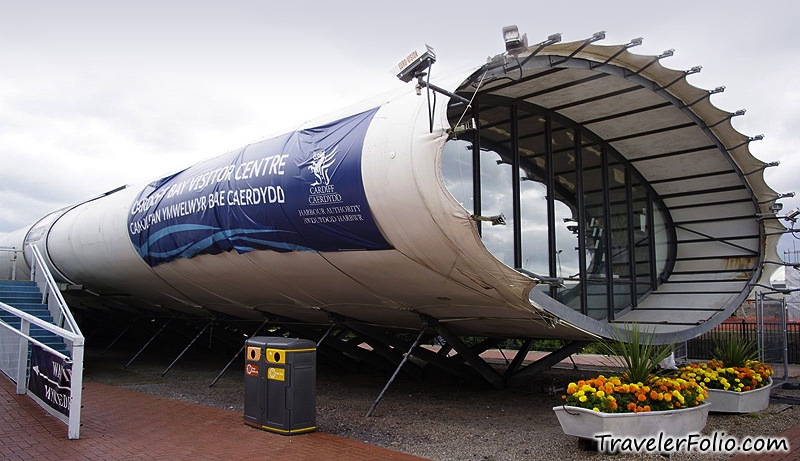
To get tourist information, souvenirs and understand more about Cardiff through videos, exhibitions and interactive displays, look for the “squashed toilet roll” structure. Locally known as “the Tube”, the design of the visitor centre is so “unconventional” that I nearly missed it!

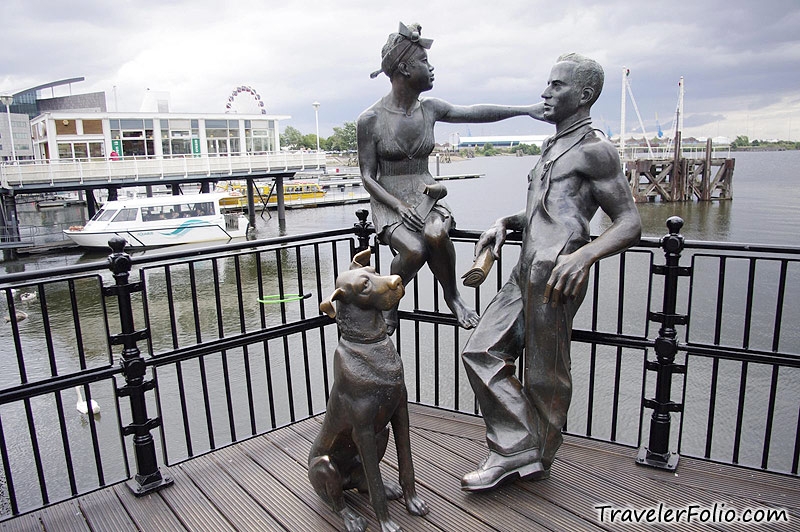
There are plenty of shops, restaurants, bars and cafes at the Mermaid Quay. Stroll along the boardwalk and greet the People Like Us. The bronze sculptures reflect the diverse culture and attributes of the world major coal exporting port in the olden days.

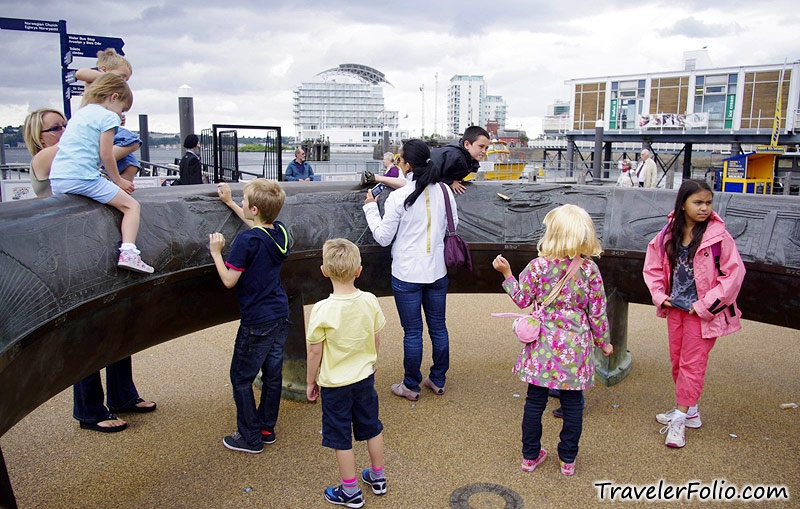
The Celtic Ring on the boardwalk with tidal charts, maritime instruments and docks indicated on its bronze surface.

If time permits, drop by Doctor Who permanent exhibition at the Red Dragon Centre in Cardiff Bay where you can find props, costumes and monsters featured in the latest series. Cardiff is home to Doctor Who, a science fiction TV series filmed in the city. Open 7 days a week till 6.30pm. An adult’s ticket costs £6.50; a child’s ticket costs £5.00.
We travelled to Cardiff Bay by the bendy bus and decided to take a different route to Cardiff Castle at the city centre by Aquabus, Cardiff’s water transport service. The designated waterbus departs hourly from Mermaid Quay to Cardiff Castle and a single adult trip costs £3 and £5 for a return trip. Kick back and enjoy the smooth sail along River Taff with a whiteness of swans swimming graciously in the waters.
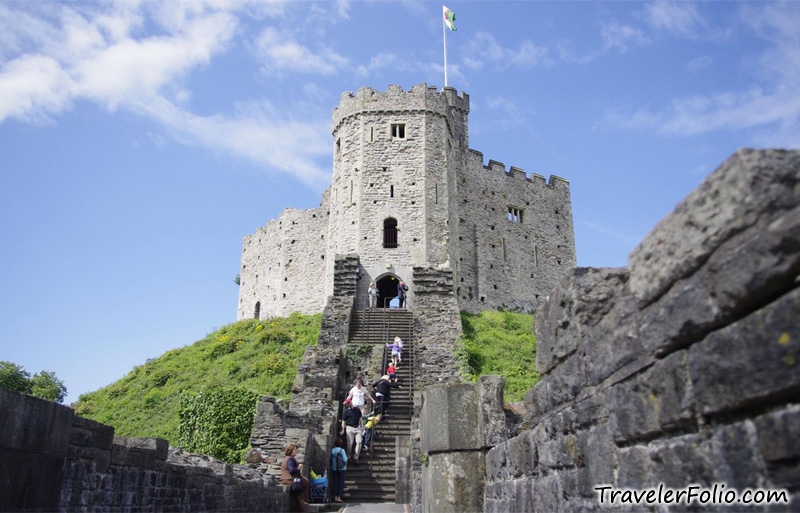
Cardiff Castle sits in the heart of the cosmopolitan city. Very deep in history, it’s the leading heritage attraction in the centre and you shouldn’t miss it. Well, you can’t miss it too! Remember I mentioned in my previous post that it’s just right across the road of Hilton Hotel where we stayed? The medieval Castle was originally constructed as a Roman fort and evolved into a variety of architectures over a period of 2000 years. It was refashioned into a neo-Gothic castle in the 19th century by the 3rd Marquess of Bute and the renowned Victorian art-architect, William Burges. In 1947, the 5th Marquess of Bute presented Cardiff Castle to the city.


Admission fee to enter the castle is £10.50 for an adult and £7.95 for a child. This includes an audio guide (with several language options) of Castle grounds, Norman Keep and Battlement walk; entry to some Castle apartments; Cardiff Castle Museum of the Welsh soldier; the Interpretation Centre with exhibition and film show.
Note: If you wish to join the 45-minute guided tour, arrive at the Castle before the tour starts at 1.40pm. The premium tour adult ticket costs £13.50 and £10.00 for a child. The premium tour will include additional Castle apartments with a guide.

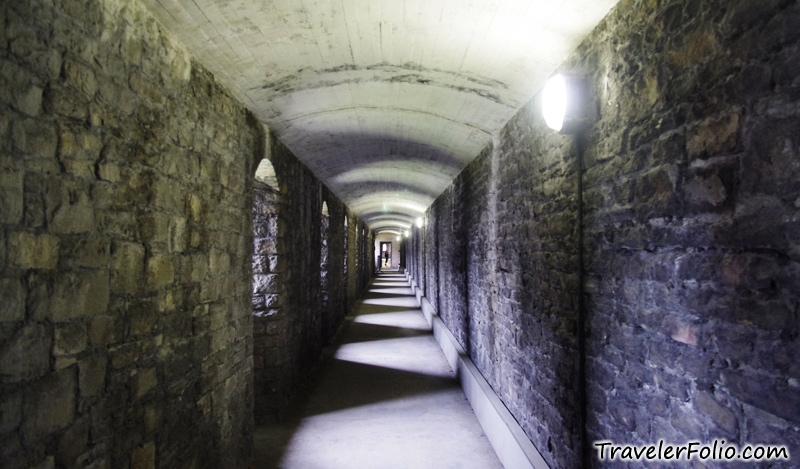
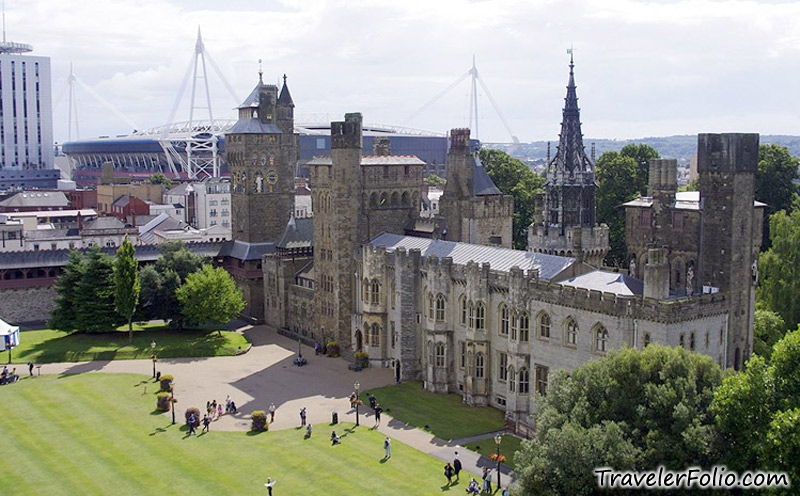
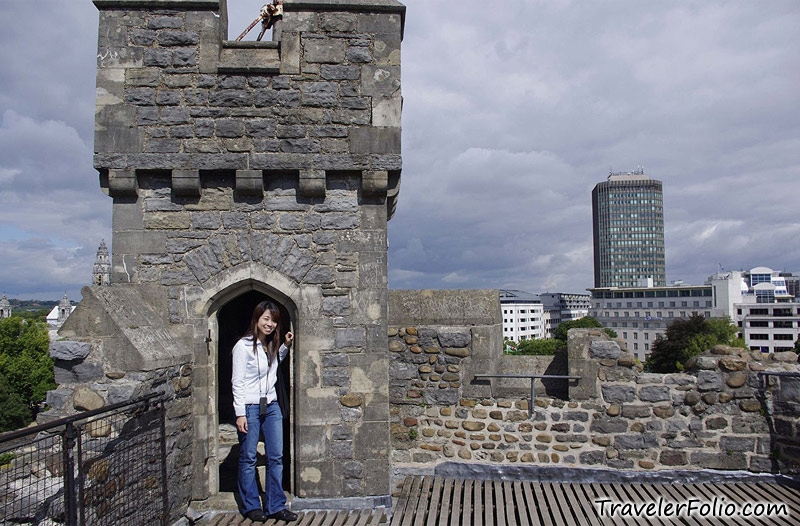
Make an easy climb up to the Norman Keep for a panoramic spectacle of the ancient Castle grounds and buildings in juxtaposition with the urbanized city. The 12th century Keep used to serve as a secure residence for the lord and his household as well as a prison and armoury. Look out for the iconic Millennium Stadium with four huge masts. Featuring a 72,000-seater capacity with a fully retractable roof, the famous sporting arena will host football competition in the London 2012 Olympics.


Adjourn to the Castle apartments to appreciate the opulent interiors and be awestruck. Highlights include the Library with a red and gold canvas adorning the walls and intricately carved furniture produced by Lord Bute’s own workshops, as well as the Arab Room with a stunning interior of Egyptian-inspired stained glass windows and Italian marble walls and floor. The medieval-themed Banqueting hall decorated with murals is the impressive centerpiece of the castle built to accommodate Lord Bute’s guests.

Powered by Blogger.