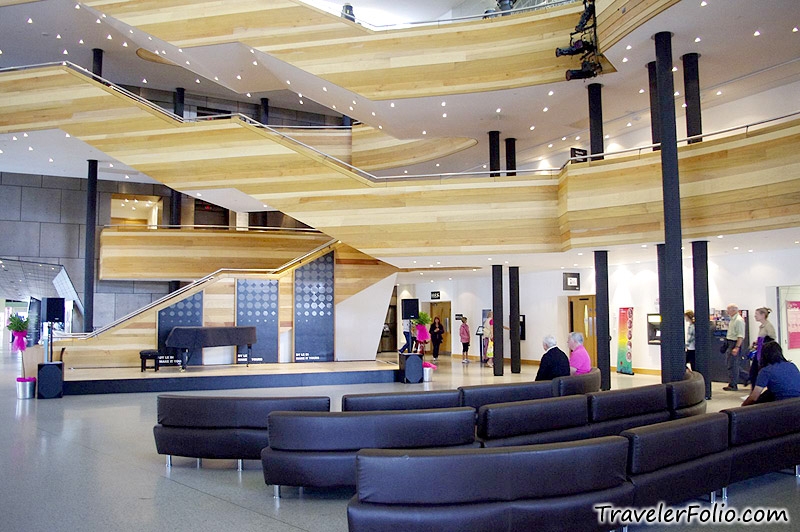
Home to the Welsh national opera and other Wales’ major cultural institutions, the Millennium Centre was opened by the Queen in 2004. Drop in for a free performance that can be jazz, classical, choir or even hip hop at the Glanfa Stage.
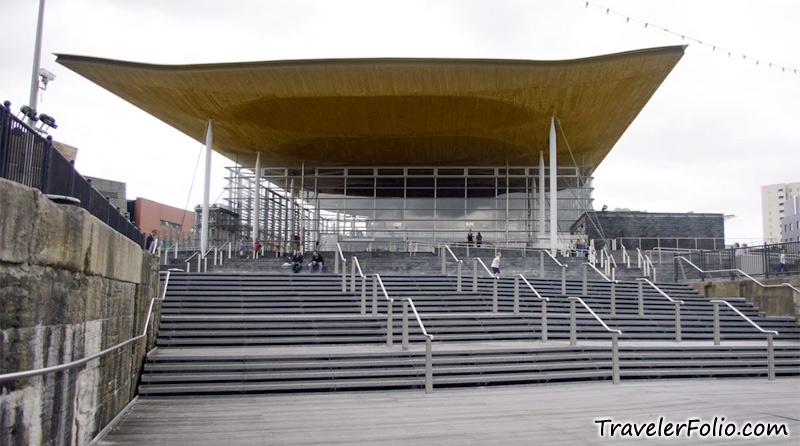
Further down, you would come across an intriguing building with a wave-like roof and see-through glass walls overlooking the bay. It’s the Welsh Senedd (Parliament) Building. Through the glass walls, everyone can see a clear view of the debating chamber and this reflects the encouragement of the involvement of public participation. The eco-friendly building incorporates natural ventilation and interestingly, when the locals express that it allows hot air to be drawn out of the debating chamber, you know it can be synonymous with heated debates!
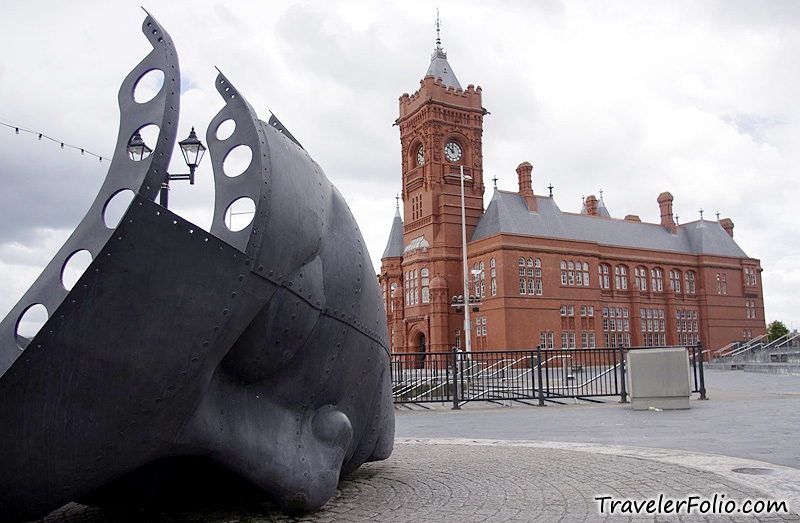
Back in the olden days, seafarers and immigrants from across the world settled near the bay and the population grew. The bustling scenes of port activities were long gone and replaced by holiday-makers relaxing around the bay. Nonetheless, the modern Cardiff Bay still retains the old charm that speaks of its glorious past as a major coal exporter to the world in the 19th century. Established in 1897, the Pierhead still stands elegantly at the waterfront. Originally the headquarters of the Cardiff Railway, the red terracotta building of French-Gothic Renaissance theme is now a Welsh history museum and exhibition centre. It’s affectionately known as the “Baby Big Ben” of Wales. In the foreground, the sculpture of a face combines with a ship hull is the Merchant Seafarers War Memorial that commemorates the seamen of Cardiff who perished during World War II.
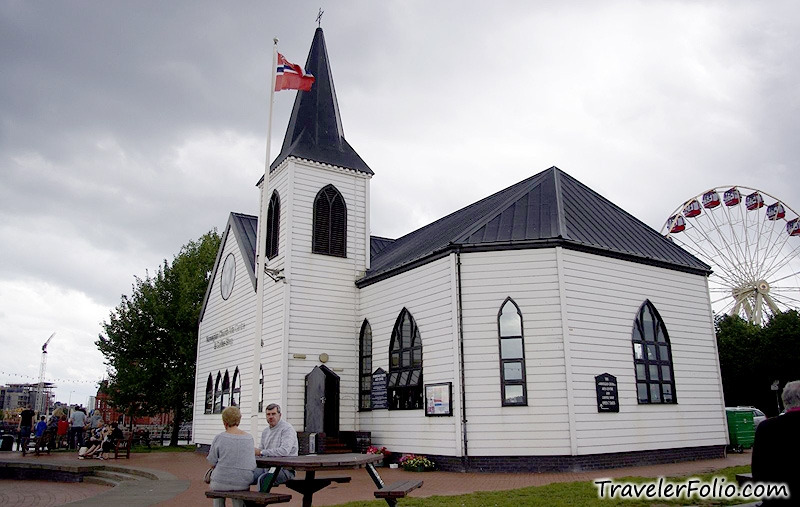
Did you know that the world famous author Roald Dahl was born in Cardiff? He was christened in the former Norwegian Sailors Church, presently known as the Norwegian Church Arts Centre that holds exhibitions, concerts and events. To try some Norwegian flavours, dine in the centre’s coffee shop that offers a range of food and drinks.
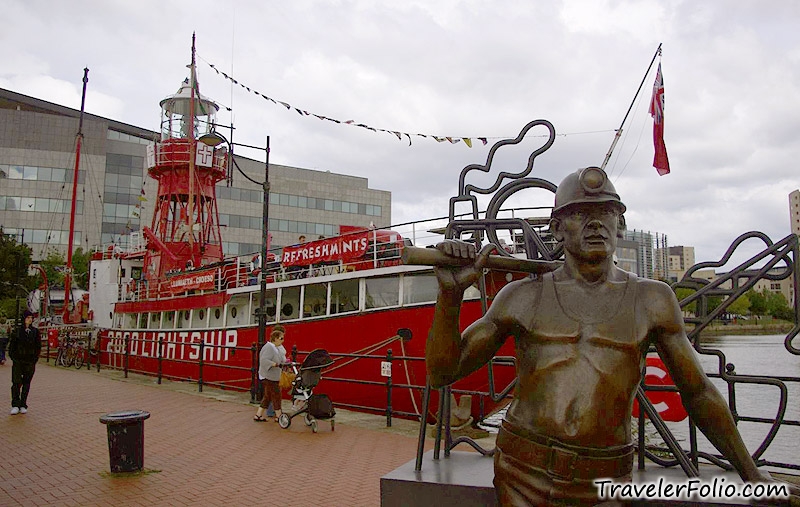
The old lightship Helwick LV14 is a floating chapel for worship and doubles as a tourist attraction where visitors can tour the vessel and enjoy refreshments with a bay view.
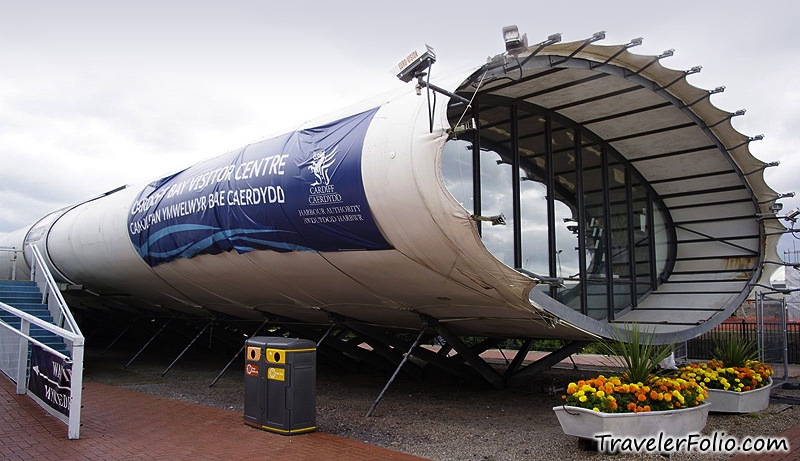
To get tourist information, souvenirs and understand more about Cardiff through videos, exhibitions and interactive displays, look for the “squashed toilet roll” structure. Locally known as “the Tube”, the design of the visitor centre is so “unconventional” that I nearly missed it!
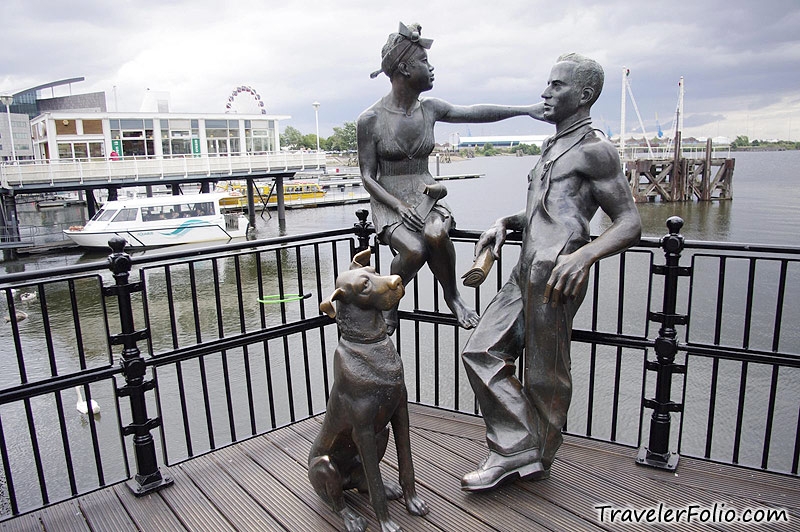
There are plenty of shops, restaurants, bars and cafes at the Mermaid Quay. Stroll along the boardwalk and greet the People Like Us. The bronze sculptures reflect the diverse culture and attributes of the world major coal exporting port in the olden days.
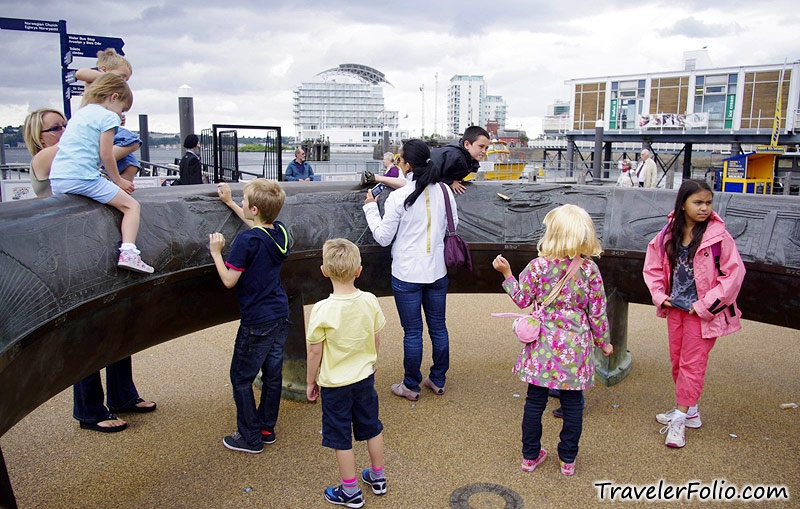
The Celtic Ring on the boardwalk with tidal charts, maritime instruments and docks indicated on its bronze surface.
If time permits, drop by Doctor Who permanent exhibition at the Red Dragon Centre in Cardiff Bay where you can find props, costumes and monsters featured in the latest series. Cardiff is home to Doctor Who, a science fiction TV series filmed in the city. Open 7 days a week till 6.30pm. An adult’s ticket costs £6.50; a child’s ticket costs £5.00.
We travelled to Cardiff Bay by the bendy bus and decided to take a different route to Cardiff Castle at the city centre by Aquabus, Cardiff’s water transport service. The designated waterbus departs hourly from Mermaid Quay to Cardiff Castle and a single adult trip costs £3 and £5 for a return trip. Kick back and enjoy the smooth sail along River Taff with a whiteness of swans swimming graciously in the waters.
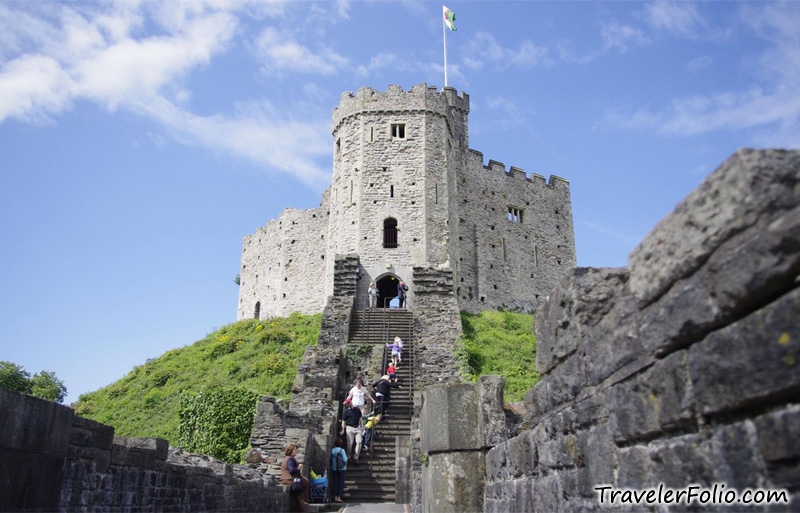
Cardiff Castle sits in the heart of the cosmopolitan city. Very deep in history, it’s the leading heritage attraction in the centre and you shouldn’t miss it. Well, you can’t miss it too! Remember I mentioned in my previous post that it’s just right across the road of Hilton Hotel where we stayed? The medieval Castle was originally constructed as a Roman fort and evolved into a variety of architectures over a period of 2000 years. It was refashioned into a neo-Gothic castle in the 19th century by the 3rd Marquess of Bute and the renowned Victorian art-architect, William Burges. In 1947, the 5th Marquess of Bute presented Cardiff Castle to the city.
Admission fee to enter the castle is £10.50 for an adult and £7.95 for a child. This includes an audio guide (with several language options) of Castle grounds, Norman Keep and Battlement walk; entry to some Castle apartments; Cardiff Castle Museum of the Welsh soldier; the Interpretation Centre with exhibition and film show.
Note: If you wish to join the 45-minute guided tour, arrive at the Castle before the tour starts at 1.40pm. The premium tour adult ticket costs £13.50 and £10.00 for a child. The premium tour will include additional Castle apartments with a guide.
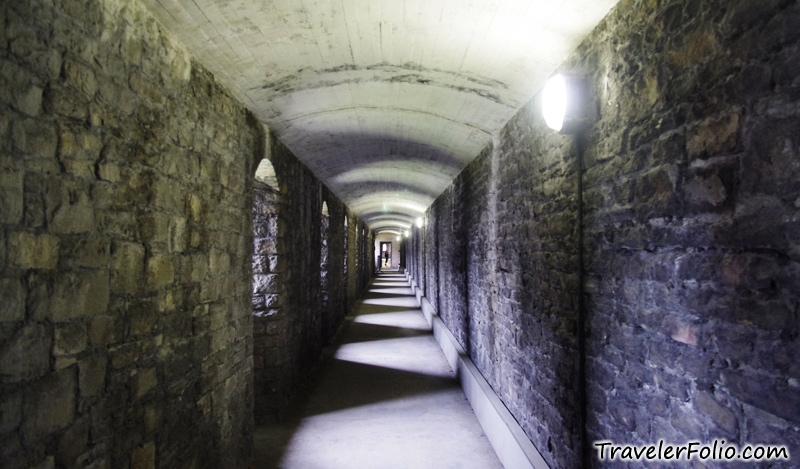
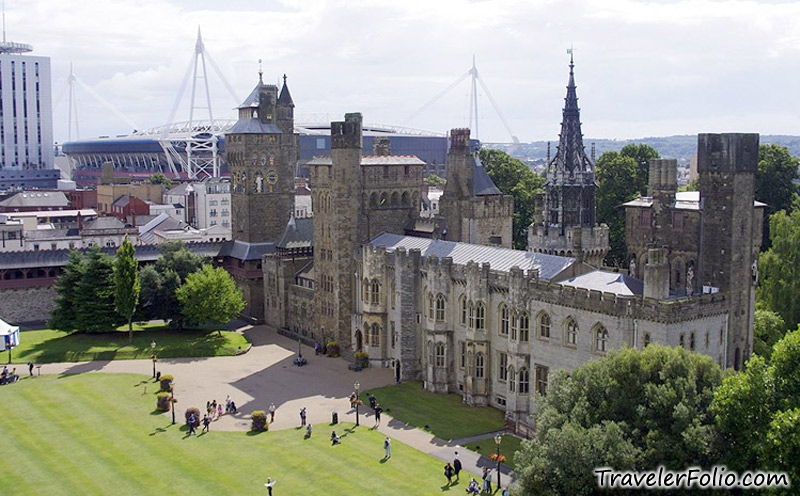
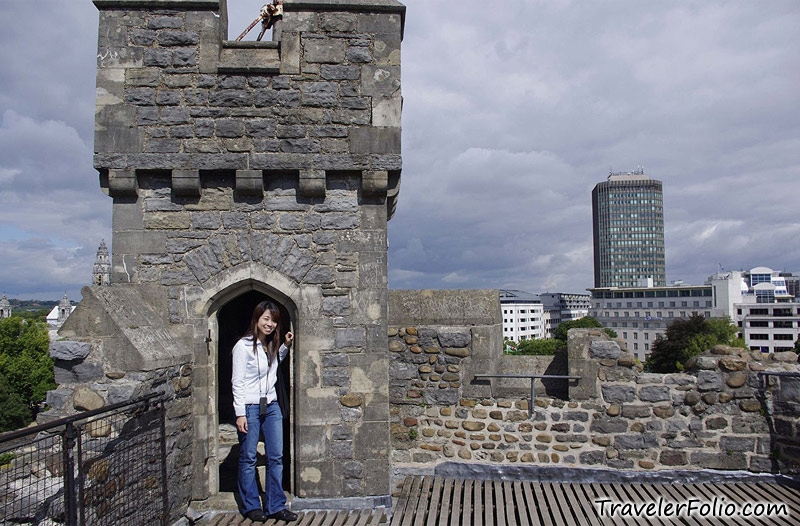
Make an easy climb up to the Norman Keep for a panoramic spectacle of the ancient Castle grounds and buildings in juxtaposition with the urbanized city. The 12th century Keep used to serve as a secure residence for the lord and his household as well as a prison and armoury. Look out for the iconic Millennium Stadium with four huge masts. Featuring a 72,000-seater capacity with a fully retractable roof, the famous sporting arena will host football competition in the London 2012 Olympics.
Adjourn to the Castle apartments to appreciate the opulent interiors and be awestruck. Highlights include the Library with a red and gold canvas adorning the walls and intricately carved furniture produced by Lord Bute’s own workshops, as well as the Arab Room with a stunning interior of Egyptian-inspired stained glass windows and Italian marble walls and floor. The medieval-themed Banqueting hall decorated with murals is the impressive centerpiece of the castle built to accommodate Lord Bute’s guests.
Over the last couple of decades Thailand has become one of the most loved travel destinations in the world. Each year many thousands of people visit Muang Thai (as it is known locally) for a travel experience they do not easily forget. Why though is Thailand such a popular destination? Why do visitors love this country so much? Perhaps the main reason for Thailand’s popularity is its diversity – it doesn’t matter which aspect of Thailand you consider, you are confronted by extremes wherever you look. Although there’s no snow (unless of course you count, Thailand has many types of landscape on offer. The mountainous regions of the north with its valleys filled with swirling fogs and mist agriculture, and as with southern Thailand, offers some of the most attractive beaches and islands on the planet. Of course, all this nature is set against Thailand’s metropolitan areas; Thailand is home to some major cities, Bangkok, the country’s capital, certainly the largest and the most formidable.
Culturally, Thailand is equally diverse as its geography. Unlike other countries in the region, Thailand has never been colonized and its history and culture have remained intact to develop a natural course. A predominantly Buddhist country, Thailand is a place of ritual and practice that are unfamiliar to most visitors and enhance the country’s exotic appeal. Influences throughout the country (Chinese influence in the north; Islamic influence in the south, etc.) add further to the intrigue Thailand generates. Many parts of country are home to hill tribes and traditional peoples whose traditional ways of life remain untouched and present a fascinating insight into the development of this country.
Of course, Thailand’s nightlife is legendary and a major attraction for visitors. The risqu? nightlife (go-go bars, etc.) on offer about the country has its place, but doesn’t constitute even a fraction of what’s on offer. Cabaret Shows and entertainment areas abound, even in the country’s less touristy areas. Of course, Thailand’s restaurants and bars help complete an irresistible package with some of the best cuisine and entertainment available.
Another reason for Thailand’s popularity as a travel destination is likely its accessibility. Although steeped in tradition, history and culture, Thailand’s infrastructure is one of the most modern in the region. Transport, banking, and telecommunications are all world class and help make even Thailand’s remotest of regions convenient and easy places to visit. This accessibility helps Thailand draw a very diverse group of visitors to Thailand – budget travelers, business people, people taking training courses… they are all here in their masses!
By far one of the key reasons Thailand is such an attraction to visitors is the Thai people themselves. Thai people are blessed with a character and temperament that are often the exact opposite of those found in the ‘west’. You see little in the way of confrontation between people here; the famous Thai smile replaces the temper and aggression that might be shown elsewhere. Despite the furry of modern life, Thais remain placid and calm amongst the turmoil creating a tranquility many visitors find infectious and an important part of their Thailand experience.
Whatever your reason for visiting Thailand, DiscoveryThailand.com hopes to give you the information you need to get the very best out of your trip… Get the most out of your Thailand experience with DiscoveryThailand.com… Kick Start a New Career
World-class English teacher training in Bangkok, Chiang Mai and Phuket with ECC.


The Korean peninsula is located in Northeast Asia, where it is bordered on the north by China and Russia and faces Japan to the southeast across the Sea of Japan. Since 1948 the country has been divided along the 38th parallel, with the Republic of Korea to the south and the Democratic People's Republic of Korea to the north. The Republic of Korea, the subject of this country page, is made up of nine provinces with Seoul, in the northern part of the country, as the capital city. Other major cities include Pusan, Daegu, Incheon, Gwangju and Daejeon.
 |
| Dragon on drum. Photo courtesy of Brian Flynn. |
It is believed that Korea was first inhabited during the Neolithic Age (c. 5,000-1,000 B.C.), when tribes from central and northern Asia came to the peninsula. From 18 B.C. to A.D. 668, three highly centralized kingdoms thrived. The Koryo Dynasty that followed saw a flourishing of Buddhism. The Choson Dynasty (1392-1910) later took power and adopted Confucianism as the state ideology, which resulted in a very structured, hierarchical social system. Choson instituted political and economic reforms and pursued a rigorous isolationist policy until the late 19th century, which earned the country the nickname of "the Hermit Kingdom."
| |
 |
| Pilbong dancers. Photo courtesy of Brian Flynn. |
Korea's population is one of the most ethnically and linguistically homogenous in the world. Except for a small Chinese community, most Koreans share a common cultural and linguistic heritage. Korea also has one of the world's highest population densities. Major population centers are located in the northwest and southeast and in the plains south of Seoul-Incheon.
 |
| Bulguksa. Photo courtesy of Brian Flynn. |
CIES encourages interested applicants to make use of the following links to complement their research into potential opportunities in Korea.
This 92-metre hillock on the northern approach to Phetchaburi provincial capital (some 36 kilometres north of Cha-am), supports the Phra Nakhon Khiri palace constructed in 1860 by King Rama IV (King Mongkut). Phetchaburi residents refer to it as Khao Wang, literally Palace Hill.
The style is mainly European with some Thai and Chinese influences. Sitting on three peaks the temple of Wat Phra Khew is to the east; the main stupa of Phra That Chom Phet in the middle and the residential Grand Palace to the west.
Both Kings Rama IV & V used the palace at their leisure and to entertain their visitors. After the death of King Rama V it was used less and less and sadly slipped into a state of decay. In 1935 it was registered as a national monument by the Fine Arts Department and was restored to be a National Museum and National Park. Open daily 9am-4pm it can be conveniently reached by funicular railway round-trip 40 Baht. Once at the top entrance to the Museum is 30 Baht for foreigners and 10 Baht for Thais. It is an excellent half-day excursion and takes a couple of hours to walk the path linking the three peaks. The views are spectacular.


